
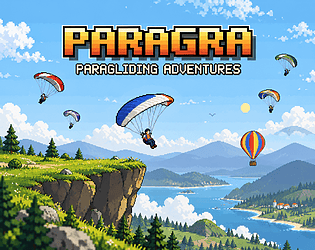
Paragra - Paragliding Adventures
AI used for: Code, Art, Sound, Writing
In the games GenPlay lists for this topic, developers use AI most for art, followed by code, writing and sound. Music and voice are less common. The developers who explain their process describe AI as a tool that makes parts of the work, while they keep the ideas, the selection and the editing.
Published 22 Nov 2026 · GenPlay, written with AI help from the developers' own words
GenPlay lists 1434 games for this topic: 875 from itch.io and 559 from Steam. Each game is tagged with the parts where its developer used AI, and most games use it for more than one part.
Art is the most common use by far, with 1393 games, a share of 97%. Code follows with 1126 games (79%), then writing with 1088 games (76%) and sound with 1038 games (72%).
Music and voice show up much less often. Music appears in 339 games (24%) and voice in 138 games (10%). For a reader who wants to make a game, this shows where most developers currently find AI useful: visuals, code, text and sound effects.
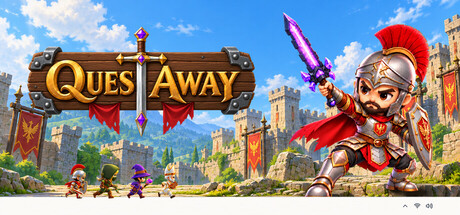
QuestAway, a free game on Steam, explains which art came from AI and what happened next. The developers write: "Some of the game's art assets, such as character and enemy models, portraits and icons, were created during development with the assistance of generative AI tools, and were then reviewed, curated and edited by the team."
Bravemech: The Century War, sold on Steam for $24.99, describes a different order of work. The team starts with its own designs: "Every mech design, the gameplay, the story, the melodies and the voice performances start with us as mock ups or demos."
From there, the developers say, "AI tools help us produce parts of the art, animation, voices, music and dialogue from them, and translate the game into four languages." Both examples keep the team involved at a different stage. QuestAway's team reviews and edits the AI art afterwards, and Bravemech's AI works from the team's own mock ups and demos.
古今東西ダービー, a racing game on Steam priced at $5.33, lists each area where it uses generative AI. For music, the developer writes: "The in-game music was created with generative AI (Suno), then selected and edited by the developer."
The same game uses a speech engine for its race commentary. In the developer's words: "The commentary audio is generated at runtime with the VOICEVOX speech synthesis engine." This means the voice lines are produced while the game runs, so the developer does not record them ahead of time.
QuestAway also uses AI for audio. Its developers write that "The music in our trailer and some of the game's sound effects and voices were" made with AI help, and the game is tagged for sound, music and voice. Bravemech names voices and music among the parts AI helps produce.
Many of the examples are small free games on itch.io that use AI for code, art, sound and writing. They cover a wide range of genres. Paragra describes itself plainly: "Paragra is a 2D arcade paragliding game."
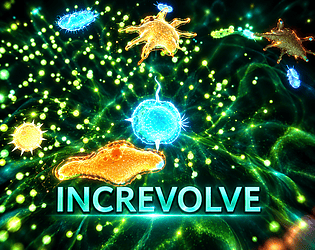
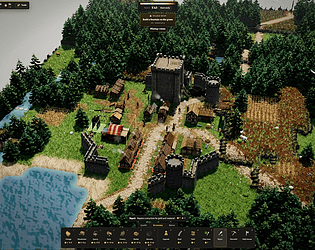
Cake Clicker - Recake is an idle game: "Cake Clicker Recake is an idle bakery clicker with isometric 3D locations." Increvolve is also an idle game, where "Clicking it gathers a small amount of biomass" that you spend on processes that make more. Castle: Build&Defend goes bigger in scope: "Castle: Build & Defend is a medieval 3D castle builder with resource management and wave defense."
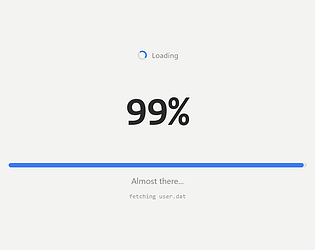
Some ideas are very small and strange. The game 99% opens with "IT'S JUST A LOADING SCREEN. IT'S AT 99%." and warns that "The longer you stay, the more it knows about you."
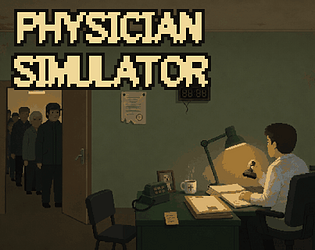
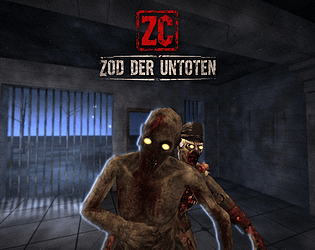
Others use AI for code, art and sound in more serious settings. Zod der Untoten calls itself "a zombie survival shooter in a WWII bunker, built to play right in your browser". Physician Simulator (Demo) puts you in a clinic, where "Patients walk through your door every day."
Two of these developers say they reviewed or edited what AI produced. The QuestAway team says its AI art was "reviewed, curated and edited by the team." The developer of 古今東西ダービー says the music was "selected and edited by the developer."
Bravemech goes further and starts every part with its own work. The designs, gameplay, story, melodies and voice performances begin as the team's mock ups or demos, and AI works from those.
For anyone planning a game, these examples point to a simple habit. Make the core ideas yourself, use AI for parts of the production, and check everything it gives you before it goes into the game. Being open about it also helps: several of these developers list exactly which parts used AI.
Many are. Of the 1434 games GenPlay lists for this topic, 860 are free, a share of 60%. Most of the examples in this guide are free, including Paragra, Increvolve, Castle: Build&Defend and QuestAway.
Many can be played without a download. 564 games (39%) play in the browser. Another 109 games are upcoming and not released yet.



Art. Of the 1434 games GenPlay lists for this topic, 1393 (97%) use AI for art, followed by code at 79% and writing at 76%.
Voice is the least common use. It appears in 138 games, a share of 10%.
Some of the developers who describe their process say they review and edit it. QuestAway's team reviewed, curated and edited its AI art, and the developer of 古今東西ダービー selected and edited its AI music.